
Mogadishu (Somalia Today) – Somalia’s federal government said Monday it will host a national consultative conference on the upcoming elections, responding to opposition demands just one day before a deadline set by political rivals.
The office of Prime Minister Hamza Abdi Barre said late Monday that the government will convene the talks in Mogadishu starting February 1, 2026.
The decision is a notable concession to the “Council for the Future of Somalia” (Golaha Mustaqbalka Soomaaliyeed), a bloc of opposition leaders and regional figures that warned of a “dangerous political split” if the administration failed to outline a clear route to elections by Tuesday, January 20.
“The Federal Government of Somalia, acting on the advice of President Hassan Sheikh Mohamud… officially invites the Council for the Future of Somalia,” the statement said, the first time the administration has formally treated the alliance as a single negotiating partner in the process.
Officials said the conference aims to “strengthen national unity” and “implement a democracy based on consultation and compromise,” and it explicitly cited “Article 6” of the opposition’s declaration, a sign the government is prepared to engage with the opposition’s terms.
Race against the clock
The announcement lands at a high-pressure moment. The current parliament’s mandate expires on April 14, 2026, followed by President Mohamud’s term on May 15.
Mohamud has pushed to move Somalia away from the clan-based “4.5” selection model toward a universal suffrage, arguing that a direct vote is necessary for the country’s democratic development.
The opposition coalition, which met in the southern port city of Kismayo in December, rejects that approach, saying it is effectively a pathway to extending terms.
They say the government has not laid the security and logistical groundwork needed for a one-person, one-vote election within the roughly three months remaining.
In its Kismayo declaration, the opposition set January 20 as a hard deadline for the government to call a consensus conference, warning that failure would create a “legal void” and could lead to a withdrawal of recognition of the federal government.
“By scheduling the conference for February 1, the government missed the exact date but met the spirit of the demand, likely averting an immediate confrontation,” said Said Ahmed Abdi, a Mogadishu-based political analyst.
To build confidence, the government also announced plans for a joint preparatory committee.
“The government invites the Council for the Future of Somalia to nominate their representatives to the organizing committee… so that they can jointly agree upon the agenda,” the statement said.
Justice and Constitutional Affairs Minister Hassan Moallin Mohamud will lead the government’s side of the preparations.
Diplomatic shockwaves
Ahmed also believes the sudden easing of tensions at home reflects a major external shock, with the government seeking to reduce internal divisions.
Late last month, Israel formally recognised the breakaway region of Somaliland as an independent state, a move that stunned Mogadishu and drew sharp condemnation from President Mohamud as an “unacceptable assault” on Somalia’s sovereignty.
The crisis has raised the cost of political fragmentation.
Sources close to the presidency say Mohamud wants a “unified front” to respond to Somaliland’s recognition, arguing that a divided Mogadishu cannot mount an effective international campaign for Somalia’s territorial integrity.
“The President believes a common stance is essential,” a source told local media earlier this month. “The recognition of Somaliland changed the calculus; we cannot afford a disputed election in Mogadishu while fighting for unity abroad.”
Thawing tensions
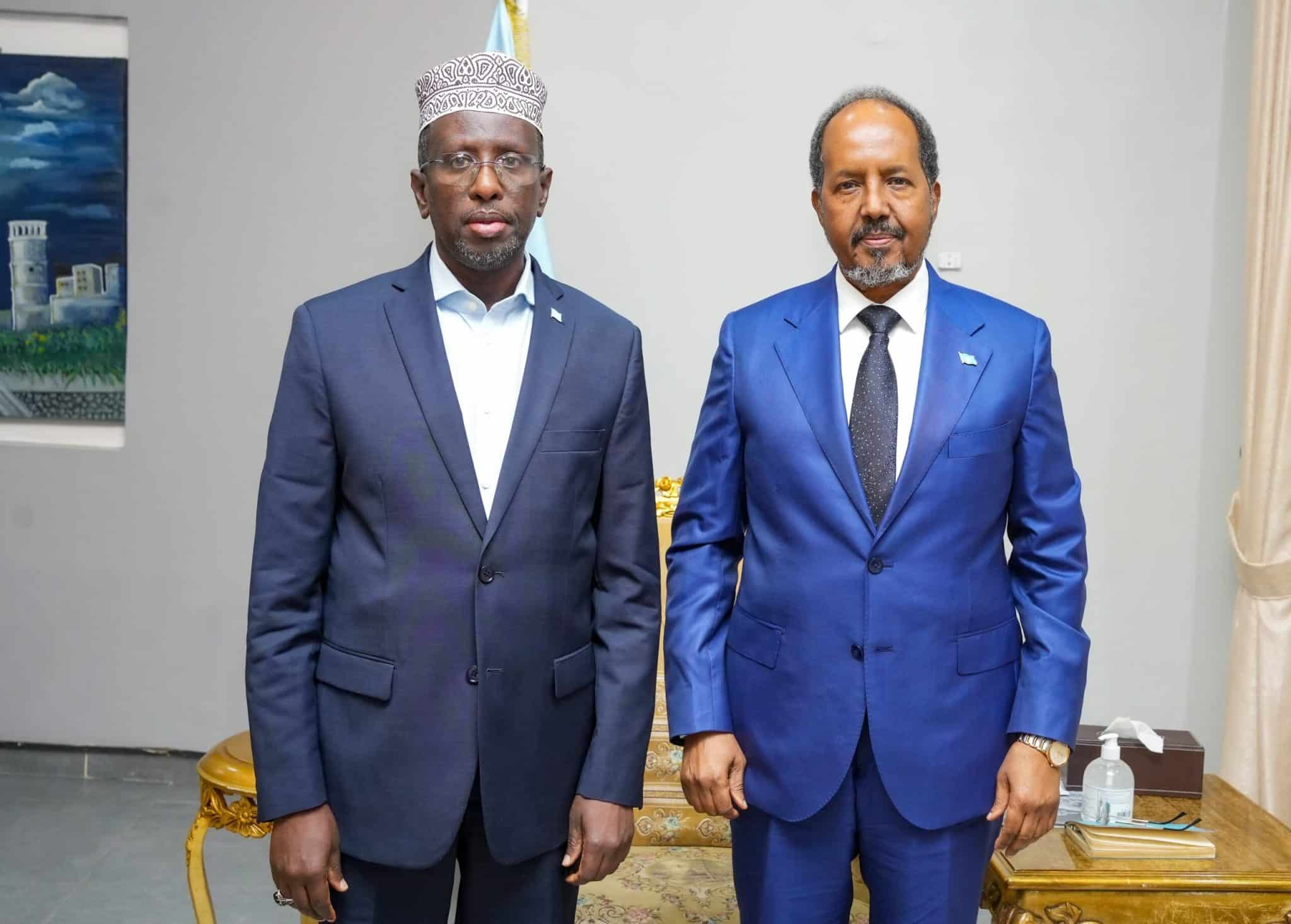
Signs of movement surfaced earlier in January when Mohamud visited former President Sharif Sheikh Ahmed, a key figure in the opposition alliance.
Aides described the meeting as an effort to reduce political tensions and said both sides agreed to keep communication channels open.
Sharif, who leads the Himilo Qaran party, urged the President to take a visible role in securing a national agreement. Monday’s statement appears to follow those quiet contacts.
Still, distrust runs deep. The opposition has accused the government of using Mogadishu for “one-sided” electoral experiments and restricting political freedoms, allegations the administration denies.
With Al-Shabaab continuing to carry out deadly attacks and hold territory in parts of the country, security analysts have long warned that a prolonged political standoff in the capital would benefit the insurgents.
Many now see the February 1 conference as the last realistic off-ramp to avoid a return to the violence and instability that marred the 2021 and 2022 election cycles.


