
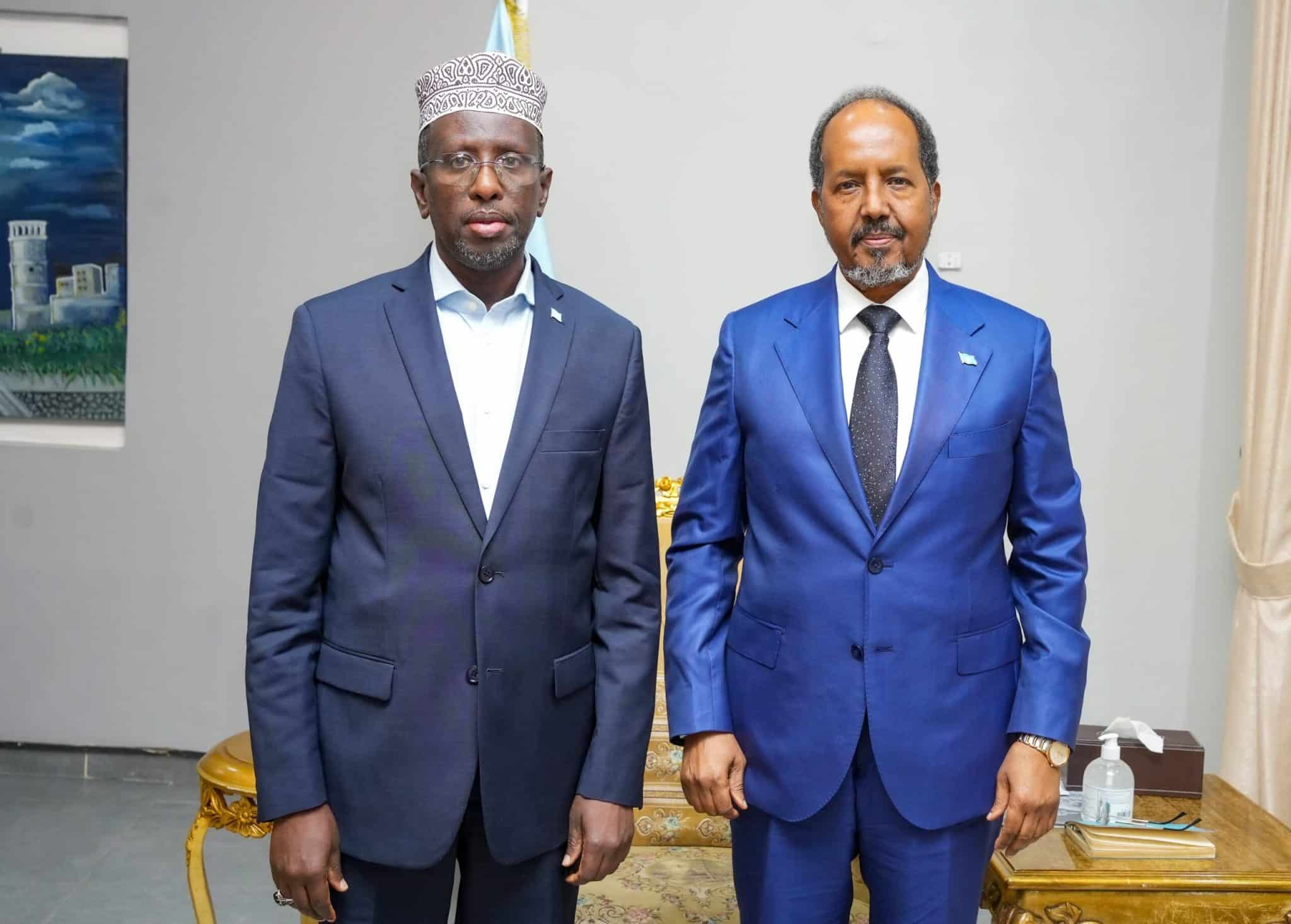
Mogadishu (Somalia Today) – Somali President Hassan Sheikh Mohamud has invited opposition leaders to talks on May 10, seeking to ease a deepening political dispute after his rivals warned they would no longer recognise him as president after May 15.
The presidency said Mohamud had formally invited the Future Council, after recent consultations with politicians, former leaders, traditional elders and other sections of Somali society.
Villa Somalia said the meeting would focus on “nationally decisive issues”, including elections, state-building, national unity and Somalia’s future political direction.
“The president believes that, at this moment, mutual reassurance and compromise are necessary,” the presidency said, adding that dialogue should take place with “good faith, transparency and responsibility” and produce “practical and constructive results”.
But an opposition statement issued the same day sharpened the standoff, accusing the federal government of pushing Somalia towards a constitutional crisis and warning against any attempt to extend Mohamud’s time in office.
Mandate row
Opposition politicians in Mogadishu said Mohamud’s “constitutional term” ends on May 15, 2026, and that after that date they would regard him as “an ordinary citizen like the rest of the people”.
“With the support of the Somali people, the legal federal member states and opposition forces, we will lead peaceful resistance, mass mobilisation and national consultation,” the statement said.
The opposition said it wanted to prevent a constitutional vacuum and help secure “a legitimate government that reflects the will of the people”.
The warning comes at a sensitive moment for Somalia, where disputes over election timetables, constitutional reform and power-sharing between the federal government and member states have repeatedly triggered political crises.
Somalia has operated under a provisional constitution since 2012, when a new federal framework took shape as the country emerged from decades of state collapse and civil war.
But attempts to finalise the constitution have exposed deep divisions over the balance of power between the presidency, parliament and federal member states.
A similar mandate-extension crisis under former president Mohamed Abdullahi Mohamed in 2021 led to armed confrontations in Mogadishu, raising fears that unresolved election disputes could again threaten the country’s fragile institutions.
Election dispute
The opposition statement said it recognised only the 2012 provisional constitution, under which Mohamud and both houses of parliament were elected.
It rejected what it called “elections by appointment”, saying any federal vote must rest on a full political agreement, transparency, public trust, realistic timing, adequate security and credible technical arrangements.
It also demanded quick elections in South West, HirShabelle and Galmudug, where state polls have faced delays and political disputes. The opposition said those votes must follow state constitutions and be credible, inclusive and trusted.
“We will not accept an election whose result is stored in President Hassan Sheikh’s computer,” the opposition said.
It said it would present, within a week, an electoral framework that meets what it described as the minimum conditions for a credible federal election.
Somalia has for years sought to move from clan-based indirect elections to universal suffrage, a goal backed by successive administrations and international partners.
Mohamud’s government says direct elections are essential to ending elite bargaining and strengthening public legitimacy.
His critics say the government is using the reform process to tighten control over electoral rules and weaken political rivals before the next national vote.
The opposition also rejected what it described as a repeat of flawed local elections in Mogadishu, saying the outcome of the process was predetermined and lacked genuine competition.
Security warning
The opposition accused the government of illegal arrests, intimidation, displacement, land seizures and the destruction of homes in Mogadishu. Federal authorities have previously presented such operations as law enforcement and urban security measures.
The opposition said it had consulted traditional elders, religious leaders, civil society groups, women, youth, the media and diplomatic representatives, including those from the United States, Britain, the European Union, Turkey and the United Arab Emirates.
The statement named several young people it said the government had unlawfully detained and called for their immediate release.
“We strongly condemn the illegal arrest and intimidation of Somali youth,” the opposition said.
It also warned against politicising the armed forces, saying the national army should not become entangled in political disputes.
“The national army is a national institution, not a political tool,” the statement said, calling for “an end to the division of the army” and for the military to stay out of politics.
The warning comes as Somalia continues to face pressure from Al-Shabaab, the Al-Qaeda-linked group that controls parts of the countryside and regularly carries out attacks against government, military and civilian targets.
The African Union Support and Stabilisation Mission in Somalia, known as AUSSOM, began work in January 2025 after replacing ATMIS, as Somali forces continue efforts to assume full responsibility for national security.
Talks or confrontation
Villa Somalia’s invitation appears aimed at opening a political channel before the May 15 deadline cited by the opposition.
The presidency said the federal government remained committed to a political process based on “unity, understanding and the protection of Somalia’s unity, sovereignty and statehood”.
But the opposition statement made clear that any talks must confront the mandate dispute, electoral legitimacy, delayed state elections and the use of security institutions.
It called on Somalis to protect peace and stability while standing together against “oppression, lawlessness and violations of citizens’ rights”.
The opposition also pledged to defend “the security of the capital”, prevent abuses and protect the constitution and statehood.
For Somalia, the coming days could determine whether the latest standoff moves towards negotiation or confrontation.
The May 10 invitation gives both sides a possible opening for compromise. But the opposition’s May 15 deadline has raised the stakes in a dispute now sitting at the centre of Somalia’s political future.


