
Borama (Somalia Today) — Somaliland’s President Abdirahman Mohamed Abdullahi “Irro” has ordered army units to withdraw from the flashpoint city of Borama after clashes left at least 16 people dead and more than 60 injured.
The unrest erupted overnight after authorities cleared a ceremony in the coastal town of Zeila to celebrate Xeer Ciise, the Issa clan’s customary law system, which UNESCO recently recognised as intangible heritage.
Many Gadabuursi clan leaders in Awdal see the event as a political signal over disputed territory rather than a neutral cultural gathering.
By Friday afternoon, smoke had cleared from parts of Borama’s main streets and some protests had eased, but anger over the fatalities – and over what residents describe as years of political and economic marginalisation – kept tensions high.
Troops told to pull back
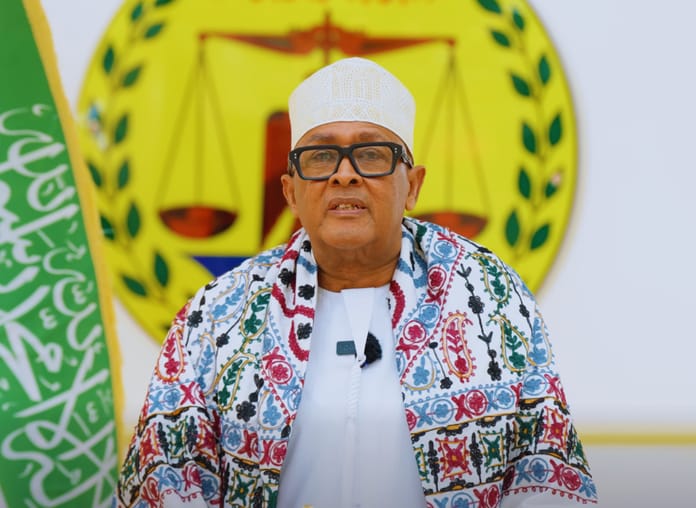
In a televised address, Irro opened with condolences to the families of those killed, calling the bloodshed “a tragedy that could have been avoided if wisdom had prevailed.”
“This is a calamity our ears should never have heard,” he said in Somali. “I have ordered all national army units deployed inside Borama to return to their barracks.”
He urged traditional elders, religious leaders, intellectuals, and business figures across Somaliland to “move quickly” to help stabilise Awdal, casting the crisis as a test of the self-declared republic’s reputation for security and political stability in the Horn of Africa.
Irro also promised a thorough investigation into how the protests turned deadly and said his administration would hold to account any security personnel or officials found responsible for the shootings and looting reported overnight.
Local media and activists accuse security forces of using live ammunition against largely unarmed demonstrators.
Mogadishu wades in
The crisis has drawn in Somalia’s federal government, which does not recognise Somaliland’s 1991 declaration of independence and has cultivated ties with disaffected communities in the north-west as part of a broader political contest.
Somali Defence Minister Ahmed Moallim Fiqi, speaking after images of bodies and wounded protesters in Borama spread online, warned Somaliland leaders against “silencing the people of Awdal with bullets” and accused Hargeisa of heavy-handed crowd control.
“People must not be crushed, their blood must not be spilled, and their voices and wishes must be heard,” Fiqi said. “If you label every popular demand as secessionism, do not stand in the way of the will coming from Borama.”
He urged residents of Awdal to remain steadfast. “A people who hold firm to a just cause will ultimately win,” he said – remarks that are likely to fuel accusations in Hargeisa that Mogadishu is encouraging an Awdal autonomy drive.
In Borama, some demonstrators carried flags linked to the Awdal State movement and chanted its name, according to local coverage.
The scenes echoed fears among Somaliland’s political elite that the region could follow the path of Las Anod, where a security mutiny last year paved the way for an SSC-Khaatumo administration.
Land, law, and identity
At the heart of the row lies the Zeila corridor on Somaliland’s western coast, a strip where Issa and Gadabuursi communities overlap and where colonial-era borders, civil war memories, and recent port diplomacy still feel raw.
Gadabuursi elders argue that celebrating Xeer Ciise in Zeila, with backing from Somaliland authorities and international bodies, quietly redraws the political map by presenting the Issa as the area’s primary custodians.
Issa leaders counter that the event is a cultural celebration of a centuries-old legal code, not a territorial encroachment.
Irro sought to reassure Gadabuursi audiences, insisting that no ceremony can rewrite the region’s history or alter sovereignty over its land.
“History teaches us that no community lightly gives up its land and homeland to another,” he said. “It is not possible for a new history to be written in Awdal that wipes away the history that has stood for centuries.”
His comments aimed to ease fears that UNESCO’s recognition of Xeer Ciise could tilt future border talks, resource-sharing negotiations, or diplomatic lobbying in favour of Issa communities in Djibouti and Ethiopia, as well as in Somaliland.
Casualties and fear
The full human cost of the clashes remained uncertain on Friday. However, doctors and local officials in Borama told Somalia Today that at least 16 people were killed and more than 60 injured when security forces opened fire on crowds protesting the Zeila event and when forces moved into parts of the city centre.
Families rushed bloodied relatives to clinics through the night. Protesters burned tyres, blocked roads, and hurled stones at security positions, residents said.
By morning, many shops stayed shut while armoured vehicles and armed personnel still guarded key intersections.
Senior Awdal politicians and clan leaders moved quickly to try to stand between angry youths and security forces and to open political channels with Hargeisa.
Lawmaker Mohamed Abiib Yusuf and other figures from the region travelled to Borama after talks with Irro in Hargeisa.
According to officials briefed on the discussions, they agreed on the need to pull back the army, de-escalate the security posture, and engage local leaders who oppose the Zeila ceremony.
Irro’s government and Awdal traditional leaders now plan broader talks with the Somaliland cabinet and organisers of the Xeer Ciise event, seeking a compromise that would allow the cultural celebration to go ahead without being read as a territorial claim or a diplomatic victory for one side.
Long-standing grievances
The Awdal region, which borders Djibouti and Ethiopia, has long complained of under-investment and under-representation in Somaliland’s security forces and civil service. Yet Hargeisa continues to present the territory abroad as a model of homegrown peace and democratic consolidation.
Analysts say the Xeer Ciise row has crystallised wider grievances over land, power, and identity in an area where cross-border clan ties run deep and where regional states – notably Djibouti and Ethiopia – watch developments for potential security and diplomatic fallout.
For Irro, a former opposition leader who once fronted protests that also ended in bloodshed, the Borama crisis is an early test of his pledge to manage political disputes through dialogue, power-sharing, and restraint rather than coercive force.
For now, Borama residents are watching to see whether the troop pullout is fully carried out, whether police units accused of firing on crowds will face disciplinary or judicial action, and whether the Zeila celebration is postponed, reshaped, or held as planned under tighter security.
Diplomats and analysts are also asking whether Mogadishu will push harder on Awdal’s grievances, and whether the unrest hardens into a sustained autonomy movement or recedes if casualties stop and negotiations produce a face-saving political settlement.
“The blood spilled today must be the last between Somaliland and the people of Awdal,” one elder said in a voice message shared on local social media. His words captured both the grief and the fear that, despite the pullback, a deeper rupture may still lie ahead.


