
Hargeisa (Somalia Today) – Somaliland, Somalia’s breakaway northern region, is ready to grant the United States privileged access to its untapped mineral wealth and offer Washington military basing rights, a senior official told AFP.
The overture comes as the self-declared republic ramps up a fresh bid for international recognition following a major diplomatic breakthrough with Israel.
Somaliland declared independence from Somalia in 1991 but remained in diplomatic limbo for more than three decades.
In December, Israel became the first and only country to formally recognise Somaliland as an independent state.
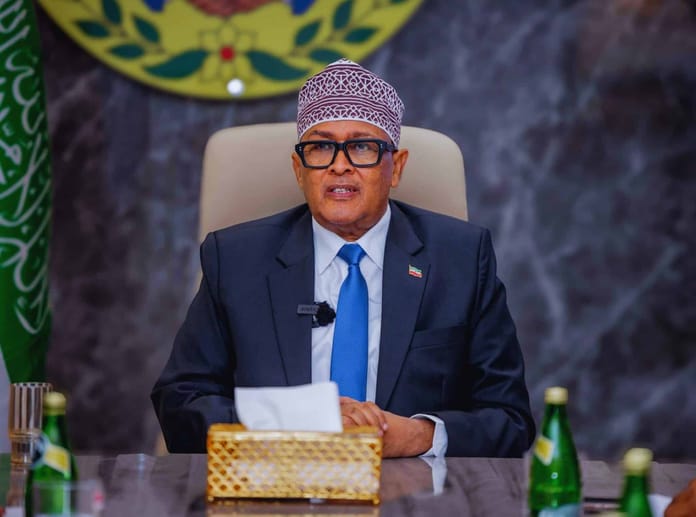
“We are willing to give exclusive (access to our minerals) to the United States,” Khadar Hussein Abdi, Somaliland’s minister of the presidency, told AFP in an interview on Saturday.
“Also, we are open to offering military bases to the United States.”
The minister said Hargeisa was optimistic about deepening ties with Washington. “We believe that we will agree on something with the United States,” he said.
Strategic Red Sea
The offer underscores Somaliland’s effort to convert its strategic location along the Gulf of Aden into diplomatic leverage.
Major powers are increasingly competing for footholds near the Bab el-Mandeb Strait, one of the world’s busiest maritime corridors.
Somaliland sits directly across the Gulf of Aden from Yemen.
Houthi militants in Yemen have repeatedly targeted shipping linked to Israel and its allies since the start of the Gaza war.
Washington currently operates Camp Lemonnier in neighbouring Djibouti, a key hub for US forces.
But Somaliland officials argue their 850-kilometre (530-mile) coastline and airfields could offer additional options for basing and logistics.
The deep-water port of Berbera, rapidly modernised with investments from Emirati logistics giant DP World, boasts a massive runway once designated as an emergency landing strip for NASA’s Space Shuttle.
Somaliland President Abdirahman Mohamed Abdullahi, known as Irro, recently suggested granting Israel preferential access to Somaliland’s resources.
Hussein Abdi told AFP he could not rule out the possibility of allowing Israel to set up a military presence in the territory.
Mineral wealth
Somaliland officials say their soil contains lithium, coltan, and other sought-after resources used in batteries and electronics.
They acknowledge a lack of independent studies mapping the exact scale of the reserves.
But a Saudi firm, Kilomass, secured exploration rights in Somaliland in 2024 for lithium and other critical minerals.
The agreement feeds Hargeisa’s claim that it can become a serious player in the global energy supply chain.
The overture to Washington also comes amid a fierce diplomatic tug-of-war between Somaliland and the internationally recognised government in Mogadishu.
In a letter seen by Somalia Today last year, Somali President Hassan Sheikh Mohamud offered the United States exclusive control over certain air bases and ports.
The offer included facilities in Berbera, Somaliland’s main commercial hub.
Somaliland officials dismissed the proposal, arguing that Mogadishu has no physical control over the northern territory and cannot deliver on its promises.
Turkey plea
Somalia has denounced Israel’s recognition of Somaliland as an attack on its territorial integrity.
Mogadishu rallied support from the African Union and many Arab states to condemn the move.
The European Union reiterated its backing for Somalia’s unity and urged dialogue, while the United Nations Security Council convened an emergency session over the crisis.
Turkey, a close ally that has expanded its military and economic footprint in Somalia, also criticised the Israeli recognition.
Turkish President Recep Tayyip Erdogan warned the move could destabilise the volatile Horn of Africa.
Hussein Abdi directed unusually blunt remarks at Ankara, insisting Turkish officials should deal directly with Somaliland.
Turkish officials “must talk to us, not to Mogadishu,” he said.
He dismissed Somalia’s federal leadership as irrelevant to the north. “It is fragmented factions who sit in Mogadishu,” he said. “They don’t agree on anything.”
“So focusing on that does not help the security of the region,” he added.
Historical scars
Even with the international backlash, US politics around Somaliland have sharpened.
Following the UN Security Council session, the United States said it had “no announcement” on recognising Somaliland and that there was “no change” in US policy.
But proposed legislation in Congress has sought to authorise recognition of Somaliland.
Other measures have pushed for deeper economic engagement without formally recognising statehood.
US President Donald Trump, who returned to office in 2025, previously suggested he was evaluating the issue.
Somaliland seceded from Somalia following the collapse of the central state and the ouster of military dictator Siad Barre.
Barre’s forces devastated parts of the north during a brutal civil war in the 1980s, leaving deep scars.
While much of southern Somalia plunged into prolonged conflict and an ongoing Islamist insurgency, Somaliland built its own democratic institutions.
The territory holds regular elections, issues its own passports, and maintains its own army and police force.
But its push for sovereignty has fuelled fears of precedent-setting secession across Africa.
It has also heightened tensions with neighbours, including after a controversial 2024 agreement with Ethiopia over maritime access to Berbera that Somalia declared null and void.


