
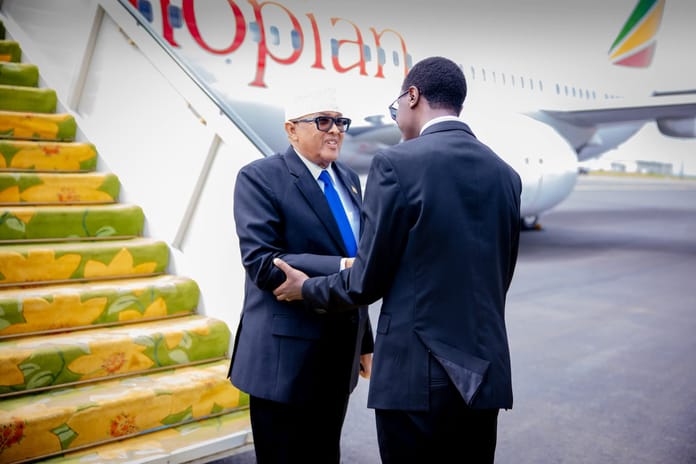
Hargeisa (Somalia Today) — Somaliland’s president wrapped up a high-stakes visit to Ethiopia this week without clinching a final deal on a key port transit agreement, a setback for a project central to both economies.
President Abdirahman Mohamed Abdillahi Irro returned to Hargeisa on Thursday after two days of talks with Prime Minister Abiy Ahmed.
While officials in Hargeisa called the meetings “fruitful,” a source familiar with the negotiations told Somalia Today the trip did not produce the long-anticipated breakthrough on the pact that underpins the development of Berbera port.
The agreement is crucial to unlocking a $442 million investment by Dubai-based logistics giant DP World, which is expanding Berbera into a regional trade hub on the Gulf of Aden.
The project is designed to give landlocked Ethiopia an alternative route to the sea; it now relies on Djibouti for more than 95 percent of its maritime trade. But without a formal customs and logistics framework, the port cannot operate at full capacity. The second phase of DP World’s investment remains on hold.
Stalled pact
The transit deal, under negotiation for more than a year, would regulate the flow of goods along the 260-kilometer (160-mile) Berbera Corridor to the Ethiopian border. It covers technical but essential issues such as customs duties, insurance, and permits for trucking and logistics operators.
DP World has already invested about $250 million to complete the first phase of the container terminal, which opened in 2021. Sources close to the project say further expansion depends on the transit agreement, which will shape the corridor’s commercial viability and day-to-day efficiency.
For Somaliland, a self-declared republic without international recognition, Berbera is the flagship economic project. Hargeisa hopes its success will strengthen its long-running case for sovereignty since breaking away from Somalia in 1991.
Somaliland’s push for recognition has defined its foreign policy for three decades. The Berbera partnership with Ethiopia and DP World, first signed in 2016, remains its most significant economic deal.
The main hurdle is turning broad strategic intent into a binding operational agreement that gives investors confidence, according to the World Bank.
Diplomatic tightrope
The talks came amid a sensitive diplomatic backdrop. Two days before President Irro arrived, Prime Minister Abiy met Somali President Hassan Sheikh Mohamud in Addis Ababa.
In an October 12 statement, Villa Somalia said the two leaders discussed cooperation based on “mutual respect… the sovereignty and unity of each country.” The language was widely read as a reaffirmation of Mogadishu’s firm stance that Somaliland is part of Somalia.
That meeting highlighted the balance Ethiopia is trying to keep. Tensions date to a controversial port-for-recognition memorandum signed in January 2024. The MoU envisioned Ethiopia gaining a naval base and commercial sea access in Somaliland in exchange for considering recognition of Somaliland’s independence.
Somalia condemned the move as an “act of aggression.” To defuse the crisis, Ethiopia and Somalia signed the Ankara Declaration in December 2024, pledging dialogue and respect for each other’s sovereignty.
Somaliland’s Presidency said Thursday that President Irro’s visit “served to further strengthen the longstanding bonds of friendship.”
Ethiopian officials did not immediately respond to emailed requests for comment on Friday about the status of the agreement.
For now, the future of the Berbera corridor hinges on solving technical issues amid a still-charged political climate. No date has been set for the next round of talks.


