
Washington (Somalia Today) – The US Central Intelligence Agency (CIA) is working to arm Kurdish opposition forces to foment a popular uprising and launch a ground operation inside Iran, US media reported Tuesday.
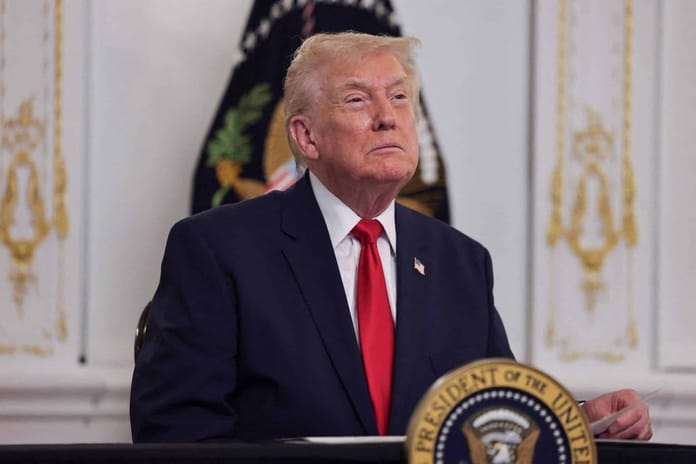
The reported covert plan comes as President Donald Trump held a series of sensitive phone calls with Kurdish leaders in Iraq and Iran to discuss military coordination.
The moves mark a dramatic escalation that could add a ground combat dimension to the ongoing US-Israeli air war against the Islamic Republic.
The Trump administration is in active discussions with Iranian opposition groups and Iraqi Kurdish leaders about providing military support, CNN reported, citing sources familiar with the plan.
The goal is for Kurdish armed forces to tie down Iranian security personnel, making “it easier for unarmed Iranians in the major cities to turn out without getting massacred”, one source told the network.
‘Boots on the ground’
The Kurds are often described as the world’s largest ethnic group without a state.
An estimated 25 to 30 million Kurds live across a mountainous region spanning southeastern Turkey, northern Syria, northern Iraq, and northwestern Iran.
Kurdish fighters, known as “peshmerga” or those who face death, possess decades of combat experience.
They most recently served as the tip of the spear in the US-led coalition’s fight against the Islamic State group in Iraq and Syria.
The current military strategy reportedly mirrors the 2001 US invasion of Afghanistan.
During that conflict, American airpower provided heavy cover for the Northern Alliance — a coalition of ethnic minority fighters — to topple the Taliban regime.
The push to leverage Kurdish fighters is the culmination of months of behind-the-scenes lobbying by Israeli Prime Minister Benjamin Netanyahu.
Netanyahu laid out a detailed vision for a Kurdish uprising during a marathon White House meeting with Trump, Axios reported.
“He had the successor planned out. He had the Kurds all figured out,” a US official told the outlet.
In recent days, the Israeli military has bombarded Iranian military and police outposts along the Iraq-Iran border.
The strikes are intended to “lay the groundwork for the possible flow of armed Kurdish forces into northwest Iran,” an Israeli source told CNN.
High-level talks
To facilitate the operation, Trump has personally reached out to key Kurdish figures.
Trump spoke on Sunday with Masoud Barzani and Bafel Talabani, the leaders of the two main Kurdish factions governing the autonomous Kurdistan region of Iraq.
Talabani, leader of the Patriotic Union of Kurdistan (PUK), confirmed the call, stating Trump “clarified the objectives of the US in the current war”.
Iraqi Kurdish cooperation is vital, as any US weapons intended for Iranian Kurdish rebels would need to transit through their territory.
The CIA currently maintains an outpost in Iraqi Kurdistan near the Iranian border, while US troops are based in the capital, Erbil.
Trump also spoke on Tuesday with Mustafa Hijri, the president of the Democratic Party of Iranian Kurdistan (KDPI).
A senior Iranian Kurdish official told CNN that opposition forces expect to take part in a ground operation in western Iran in the “coming days”.
“We believe we have a big chance now,” the official said, adding that the militias expect US and Israeli support.
White House press secretary Karoline Leavitt declined to discuss the specifics of the calls, noting Trump has been in contact with many regional allies.
The CIA also declined to comment on the reports.
Regional risks
Despite the ambitious planning, significant hurdles remain.
US intelligence assessments indicate that Iranian Kurdish groups currently lack the resources and influence to single-handedly bolster a successful national uprising.
The opposition groups are also heavily fractured by ideological differences and competing agendas.
Six days before the war began, five dissident Kurdish groups sheltering in Iraq announced the formation of the Coalition of Political Forces of Iranian Kurdistan.
However, the announcement quickly led to tensions with an exile group led by the former crown prince of Iran, Reza Pahlavi.
Furthermore, the Kurds have a long, complex history with Washington, often marred by feelings of betrayal.
Earlier this year, US forces withdrew from northern Syria as a newly US-aligned Syrian government launched a military campaign that pushed out Kurdish fighters.
“There is a concern that if an uprising is unsuccessful and the US withdraws, it will add to the narrative of abandoning the Kurds,” said Alex Plitsas, a former senior Pentagon official.
The plan also risks severe regional blowback, particularly from Turkey, a vital US and NATO ally that considers Kurdish autonomy movements a major national security threat.
Meanwhile, Iran’s Islamic Revolutionary Guard Corps (IRGC) has preemptively launched dozens of drone strikes against Kurdish groups along the border.
Arming the militias has the potential to “undermine Iraqi sovereignty… with little understanding of what it may set in motion,” Jen Gavito, a former senior US State Department official, told CNN.


