
Mogadishu (Somalia Today) – Somalia’s national intelligence agency said Thursday that a joint operation with international partners killed Abdullahi Osman Mohamed, better known as “Engineer Ismail,” a senior al-Shabaab explosives specialist long sought over some of the country’s deadliest attacks.
In a statement issued in Mogadishu, the National Intelligence and Security Agency (NISA) announced that forces killed the commander, widely known by his nom de guerre “Engineer Ismail,” in a targeted special operation in the insurgent stronghold of Jilib.
NISA said the raid took place on December 10 and involved “international partners.” The operation struck a major blow to the leadership of the Al-Qaeda-linked al-Shabaab group, although NISA did not identify the foreign partners involved.
Forces also killed a second senior commander in the operation: Abdikariin Mohamed Hirsi, known as “Qoorleex,” whom NISA described as a key operative in the group’s propaganda wing.
NISA called the operation “pre-planned” and “highly coordinated,” and said it had “ended the threat” posed by the two men. Independent sources have not yet verified the agency’s account, and no foreign government has issued a public statement confirming the deaths.
A high-value target
For more than a decade, Engineer Ismail has loomed large in Somalia’s security assessments.
Somali and Western officials have described him as a central figure in al-Shabaab’s explosives network, and they credit him with professionalizing bomb-making and overseeing production and deployment pipelines.
NISA described him as the “brain” behind the group’s bomb-making apparatus, and said he held senior roles spanning explosives, the Amniyat intelligence wing, and the group’s media operations. His profile put him on a U.S. Rewards for Justice list offering up to $5 million for information leading to his location.
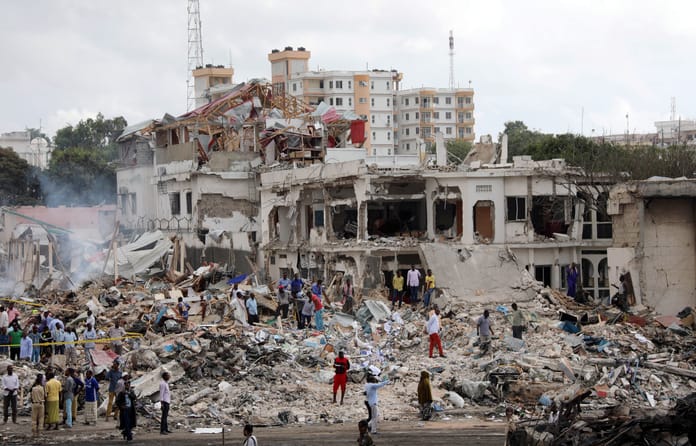
Somali authorities have long linked him to the October 14, 2017, truck bombing in Mogadishu, which killed hundreds at the Zoobe junction and remains the deadliest attack in Somalia’s history. The bombing left a lasting scar on the capital and reshaped the country’s security posture.
“He was among the most dangerous commanders of the Khawarij enemy,” the NISA statement said. Somali officials frequently use the term “Khawarij,” a historical pejorative for extremist factions, to describe al-Shabaab.
The shadow war
NISA led Thursday’s announcement, but the operation fits the pattern of the long-running counterterrorism campaign in Somalia.
The agency did not say whether the mission used air support, but Jilib, in the Middle Juba region, remains one of al-Shabaab’s core bastions. Somali forces and their allies have repeatedly targeted the area in raids and strikes.
A 2021 New York Times investigation identified Mohamed as the target of a botched U.S.-led raid in November 2020. In that operation, a blast fatally wounded CIA paramilitary specialist and former Navy SEAL Michael Goodboe, while the bomb maker reportedly slipped away.
U.S. sanctions listings by the Office of Foreign Assets Control (OFAC) identify Mohamed under multiple aliases and link him to locations, including Jilib. His reported survival of the 2020 raid strengthened his standing inside militant circles as a figure who could evade elite pursuit.
Thursday’s statement suggests Somali and allied intelligence services have kept their focus on high-value targets, and they continue to rely on surveillance, informant networks, and elite Somali units to push operations deep into militant-held terrain.
Information warfare
NISA said the operation also killed Abdikariin Mohamed Hirsi (“Qoorleex”), whom it described as a figure in al-Shabaab’s information apparatus with responsibility for the Juba regions.
NISA identified him as part of al-Kataib, the group’s media foundation that produces propaganda content aimed at recruitment, intimidation, and narrative control. Somali officials say such media operations help al-Shabaab project resilience, claim momentum, and amplify fear after attacks.
Al-Shabaab has long paired violence with disciplined messaging, using media to reinforce its parallel governance project and sustain recruitment.
If NISA’s account holds, the operation removed both a senior explosives figure and a propaganda operative in one strike. Analysts, however, have repeatedly warned that the group can replace commanders and regenerate technical expertise.
The reported killings come as Somalia navigates a broader security transition, including the planned shift from the African Union’s ATMIS mission to a successor framework backed by international partners.
Despite political and operational changes, al-Shabaab continues to operate as a “state within a state” in parts of southern and central Somalia, collecting taxes, running courts, and enforcing rule through coercion.
Somali officials argue that they must dismantle the group’s bomb-making networks to protect civilians, government institutions, and economic lifelines.
NISA said the operation neutralized the threat posed by the two men, but it did not say whether Somali or partner forces suffered casualties, or whether forces killed or captured additional militants.


